 I freely admit that I am sceptical of many artificial intelligence (AI) announcements. My first attempt to draft an article on "sponge cities" with references generated reasonable but bland text. The references looked good - I recognised most of the journals, the year/volume/issue information was reasonable, and the page numbers matched the page range in the journals. However, none of the referenced articles actually existed in those journals. The risks of AI outweighed the benefits.
I appreciate that AI is continuing to improve, but even this morning asking ChatGPT "Is it possible to get 3% milk by mixing 1% and 2% milk?" returns "Yes, you can get 3% milk by mixing 1% and 2% milk, but you will need to use a 1:2 ratio of 1% milk to 2% milk (for every 1 liter of 1% milk, mix in 2 liters of 2% milk)." ChatGPT included a series of equations that solved to y=−2x where y is the quantity of 2% milk and x is the quality of 1% milk. The equation may have been technically correct but not practical in the real world. A second attempt at asking the same question of ChatGPT returned a muddled response: "Yes, it is possible to mix 1% and 2% milk to get 3% milk, but you would need to mix them in specific proportions. However, the resulting mixture will actually have a fat content that is lower than 3%, since the 1% and 2% milk both contain less fat than whole milk." Other AI engines also generated incorrect responses but those that showed references made it easier to detect hallucinations.
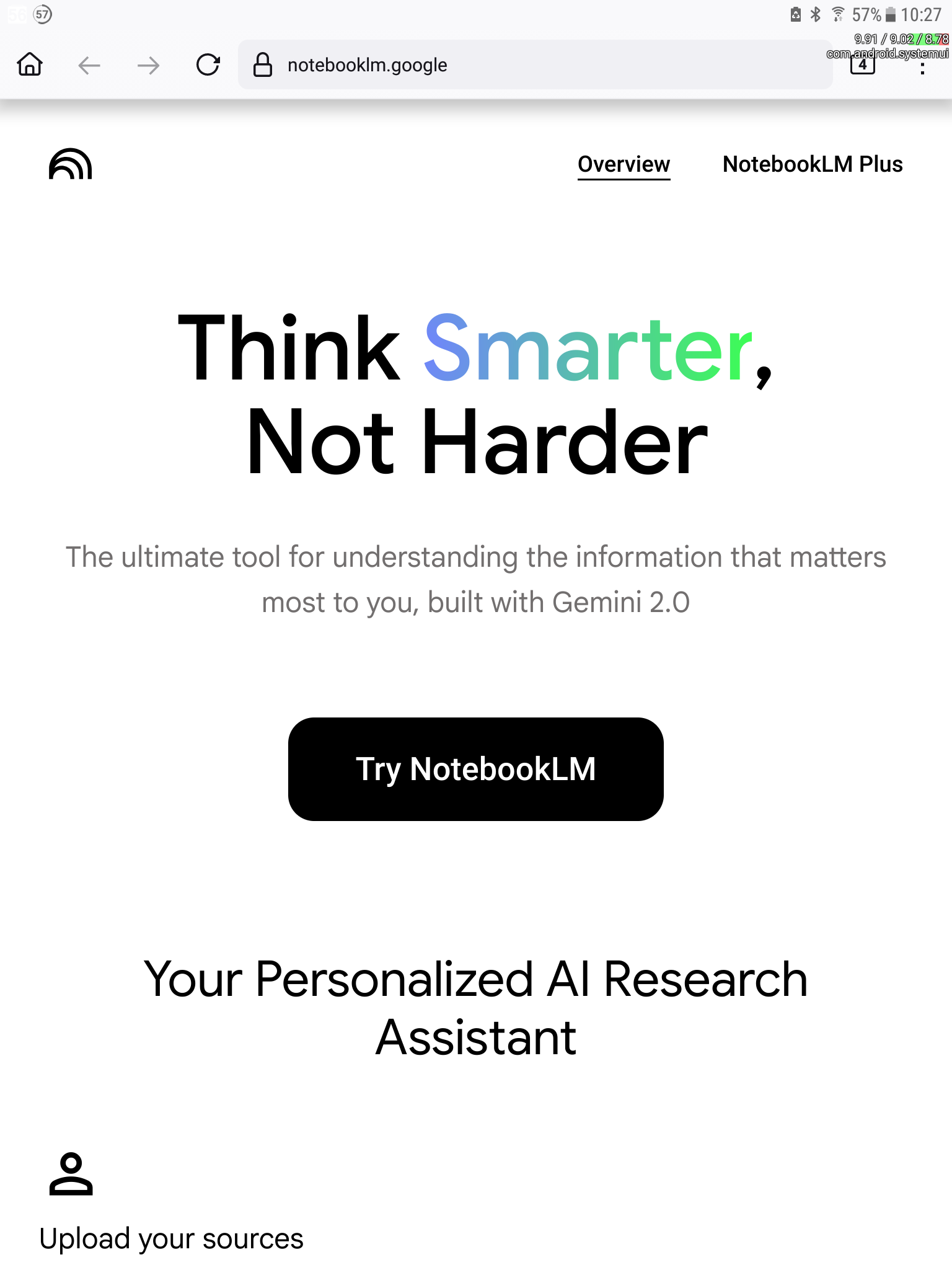
I see value in using large language models trained on smaller and better curated data - the results are better and the resource requirements less. I have been using Google's NotebookLM (https://notebooklm.google.com/) to ingest PDFs like the 548 page manual for my 2025 Niro EV that has a poor index and table of contents. The manual is available as a PDF but the limited search capability of of Adobe Acrobat Reader makes finding information difficult. NotebookLM handles documents up to 500,000 words and had no difficulty with the PDF. I can now ask complex questions relating to the car and get answers that even the dealership did not know. I have seen a few cases where NoteboookLM misinterpreted text but it shows the source and context on which its response was based. Since NotebookLM runs in the cloud, I have intelligent access to the Niro manual from my phone or tablet and can share access with others. NotebookLM can save responses as "notes" but does not include the prompt text.
The 2025 Niro EV comes with a 278 page manual for the Infotainment Unit. Softcopy is only available as dynamic web pages that are not searchable. Although NotebookLM can handle websites, it does not 'crawl' dynamic websites so I am stuck with paper until I can figure out how to convert the website into a PDF.
Blog comments1
Good post, Norbert! Looking…
Good post, Norbert! Looking forward to trying this myself with some docs