I am on a well that delivers very hard water causing lime scale buildup in kettles and hard to remove soap scum. I installed a water softener after the lower element in my water heater failed because it was buried in scale. At the time, residential reverse osmosis systems that removed the calcium/magnesium (bi)carbonates were not readily available for residential use. Most residential water softeners still work on an ion-exchange principle where resin in the water softener tank exchanges sodium ions for the calcium/magnesium ions. The softened water contains sodium (bi)carbonate, but this does not result in as much scale or scum.
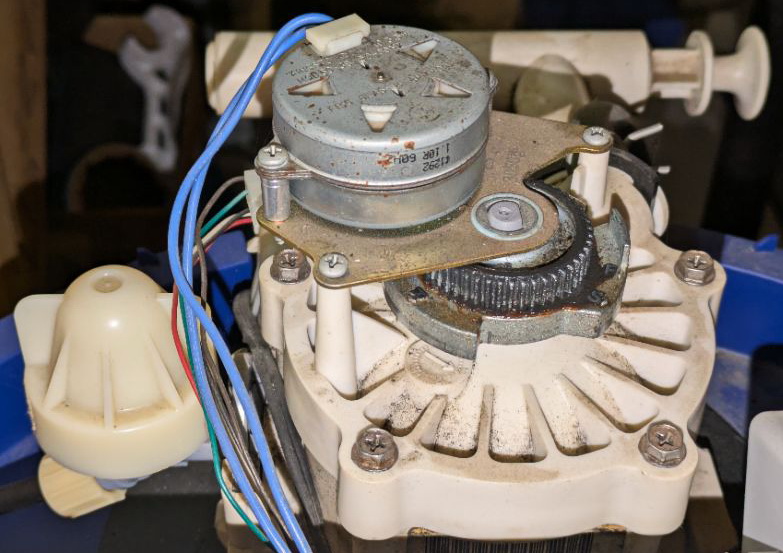
The resin needs to be recharged periodically, a process that typically takes a bit over two hours. A fill cycle adds water to dissolve salt in the brine tank, a brine cycle slowly passes brine through the resin and removes the calcium/magnesium, a backwash, and a fast rinse. My water softener has a controller that actuators a motor to turn a rotor which controls the water flow during the recharge cycle. The manual should have instructions for stepping the water softener through its cycles to help diagnose issues.
Although relatively simple, water softeners can fail. My second water softer installed in 2002 stopped working after five years. Typical signs are scale buildup on sinks, faucets, and kettles, and the water feels less slippery. There are test strips that measure hardness, but I would need at least four sets to cover the range of hard to soft water. I have had good success with GH (general hardness) and KH (carbonate hardness) test kits for aquariums. Only the GH test is useful for ion-exchange water softeners since the water softener does not remove the carbonate ions. The hardness test involves adding 5ml water in a plastic tube, then adding drops of the GH reagent (mixing well in between) until the solution turns from green to orange. My unsoftened water requires about 32 drops, while softened water only requires one. Unfortunately, one drop adds very little colour - it can be hard to distinguish green from orange. To be sure, I will add one or two more drops: this will either confirm the green reading or switch to orange. I try to test the day before the water softener recharges but if I am a day late, I will check the hardness of water from the hot water faucet (before the water heats up) since the tank acts as a buffer.
Many things can cause unexpectedly high water hardness. Sometimes I forget to fill the brine tank with salt. Another common problem is a "salt bridge" where a crust of salt forms inside the brine tank. The water in the fill cycle removes all the salt below the bridge, resulting in a brine cycle without salt. One indication is that the salt level in the tank is higher than what the water softener controller estimates. I keep a pole beside the brine tank to stir the salt and periodically break up any crust.
The next most common problem is a failed venturi, the device to the left of the rotor assembly in the picture above. It uses the flow of house water to draw brine from the brine tank. If the venturi is not working properly, the water level in the brine tank will gradually rise over several recharge cycles. Cleaning the components inside the venturi will usually resolve the problem - check the water softener manual for a "Cleaning the Nozzle and Venturi Assembly" section. The venturi parts are small - it helps to have a good light and a place to put the parts. I suspect that over-tightening the venturi top can cause deformation of the internal gaskets. I have also overhauled the rotor twice due to grit that scored the rotor disc. This is more complicated than cleaning the venturi but Andrew at https://www.softenerparts.com/ has always been very helpful with diagnosing issues and providing parts. Although the resin in a water softener can fail within 5-10 years on chlorinated water, Andrew has seen water softeners last for 40 years on well water.
Blog comments1
Good post, Norbert! Lots of…
Good post, Norbert! Lots of great detail for anyone dealing with similar challenges.